

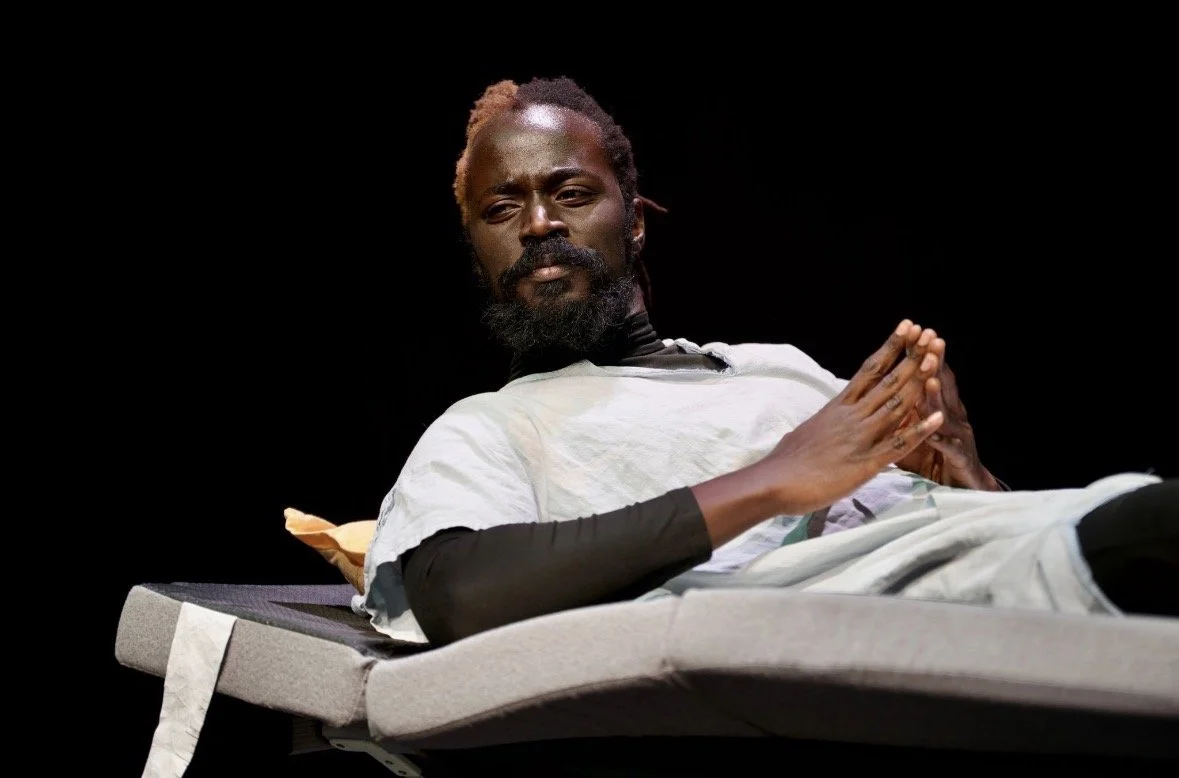
The Story of Kweku - Shared by the creator
This story came to us through a special correspondence from Toronto. It was shared by Kobena Ampofo, who performed the piece, titled "Bonsam Din," as a culmination of their time in the VUKA residency hosted at Theatre Passe Muraille.
As they explained it to us, the play was about a very simple but powerful topic: a name — the name “Kweku.”
Now, if you are from Ghana or familiar with Akan culture, you will know that names like Kwaku are not just ordinary names. They are day-names. Kweku is given to a boy born on a Wednesday.
But it is more than just a birth day label. In many African traditions, your name is connected to your character. It is believed that the day you were born may influence your personality and how you live your life.
So, carrying a name like Kweku comes with responsibility. It means you are expected to live in a way that brings honour to the name and also connects you to others who have held or will hold that name.
According to the actor who shared the experience with us, the storyteller in the play was none other than Kweku Ananse — the famous Ghanaian trickster spider.
In the performance, Ananse told the story of a pastor in the diaspora who also had the name Kweku. At first, the pastor was respected and had many followers.
But suddenly, things took a turn during one sermon. Instead of bringing honour to the name Kweku, the pastor’s behaviour caused the prominent holders of the name to take note. His actions did not reflect the values that the name was supposed to stand for.
How could someone who carried such a respected name act this way?
According to the story, the situation became so serious that something had to be done.
One of these prominent elders, Kweku Bonsam — a powerful ancestral spirit often translated as the Christian devil — appeared in the story to punish the pastor.
In many African belief systems, spirits and ancestors are often seen as guardians of culture and morality. They are believed to watch over the living and sometimes intervene when things go wrong.
In this case, the ancestral spirit stepped in to discipline the pastor for disgracing their shared name.
Kobena told us that the audience laughed when the dramatic moment unfolded on stage. The idea of an ancestral spirit showing up in Toronto to correct a pastor was both surprising and entertaining.
But behind the laughter was an important lesson:
Moving to another country does not mean you leave behind your identity, your culture, or your responsibilities. You may live in Canada, the USA, or Europe — but your name and where you come from still matter.
The story made me think deeply about young immigrants growing up abroad.
Sometimes, when people move to a new country, they feel pressure to fit in. They may change how they speak, dress, or even how they behave. In trying to adapt, they may slowly forget the values and traditions that shaped them.
But the question is: At what point do we begin to lose ourselves?
For teenagers especially, this can be very confusing. You may be trying to fit in at school while also holding on to the expectations of your family and culture. You may feel caught between two worlds — one at home and one outside.
The story of Kweku reminds us that it is possible to adapt without forgetting who we are.
Immigration may change where we live. But it should not change the responsibility that comes with our identity, our names, and our heritage.
Kobena Ampofo performing ‘Bonsam Din’ during the VUKA residency at Theatre Passe Muraille, Toronto

GHANA FEST
A Living Tradition: Ghanaian Royalty and Cultural Heritage in Montreal
The ceremonial seating of the Paramount Chief of the Ghana Traditional Council in Montreal, Canada.
In the heart of Montreal, far from the ancestral lands of West Africa, Ghanaian tradition continues to live, breathe, and flourish. These images capture moments of cultural pride, leadership, and identity in motion—celebrating a heritage that transcends borders.
Members of the Ghanaian community in traditional regalia during last year’s cultural celebrations.
The Paramount Chief in full ceremonial attire, symbolizing continuity of tradition in the diaspora.
A sacred moment from last year’s traditional rites and cultural performances.
A wide view of last year’s cultural gathering, showcasing unity, identity, and community pride.
A Living Tradition: Ghanaian Royalty and Cultural Heritage in Montreal
In the heart of Montreal, far from the ancestral lands of West Africa, Ghanaian tradition continues to live, breathe, and flourish. These images capture moments of cultural pride, leadership, and identity in motion—celebrating a heritage that transcends borders.
Members of the Ghanaian community in traditional regalia during last year’s cultural celebrations.
The Paramount Chief in full ceremonial attire, symbolizing continuity of tradition in the diaspora.
A sacred moment from last year’s traditional rites and cultural performances.
A wide view of last year’s cultural gathering, showcasing unity, identity, and community pride.
Ghana is a nation globally celebrated for its deep-rooted traditions, vibrant festivals, and powerful cultural expressions. Tourists from all over the world travel to Ghana each year to witness its unique heritage. What makes this remarkable is that this same cultural richness is now being preserved and celebrated right here in Canada.
A Legacy of Greatness
Ghana’s traditions have shaped extraordinary individuals whose influence has reached far beyond Africa.
From Yaa Asantewaa, the fearless queen mother and warrior who led the Ashanti resistance against British colonial forces, to Dr. Kwame Nkrumah, Ghana’s first President and a leading voice of Pan-Africanism who inspired independence movements across the African continent, Ghana’s legacy is one of courage, leadership, and global impact.
Ghana is also home to global intellectual pioneers such as Dr. Raphael Ernest Grail Armattoe—a renowned physician, anthropologist, poet, and politician. He was nominated for the Nobel Prize in Physiology or Medicine in 1948 for his groundbreaking discovery of the Abochi drug, making him one of the earliest Africans to receive such international scientific recognition.
The nation further produced world-changing leaders like Kofi Annan, the first Black African Secretary-General of the United Nations, whose diplomacy and leadership reshaped global peace efforts.
In sports, Ghana has gifted the world Azumah Nelson, one of the greatest boxers in history—an icon of resilience, discipline, and excellence.
A Cultural Experience Coming Soon
A grand cultural display is once again being prepared—and this time, it promises to be even more spectacular. The Ghanaian community in Canada is organizing another major celebration of heritage, royalty, and identity.
Ghanaians in Canada: Rooted and Rising
Today, Ghanaians in Canada are active contributors to the country’s diverse and dynamic society. They are entrepreneurs, professionals, artists, community organizers, and leaders.
A Visit with Nana Adu Gyamfi
The Maple Chronicles team recently visited Nana Adu Gyamfi, the current Paramount Chief, who shared insights about unity, tradition, and the future of cultural preservation in Canada. He also highlighted the need for a permanent cultural space to host dignitaries and celebrate heritage with dignity.
An Open Invitation
This celebration is more than an event—it is an invitation. An invitation to experience tradition, build meaningful connections, and celebrate diversity.
The Maple Chronicles team visiting the Paramount Chief at his residence to learn more about the upcoming year’s activities.
Ghanaian culture is not just something to observe—it is something to experience.
And now, it lives here in Canada.
The Maple Chronicles team visiting the Paramount Chief at his residence to learn more about the upcoming year’s activities.
Ghanaian culture is not just something to observe—it is something to experience.
And now, it lives here in Canada.
Why we exist…
Why we exist….